
🔰 Introduction
Panchatantra — those stories we all heard in childhood, sometimes in grandma’s lap, sometimes in school books. But have you ever paused to think how these simple animal tales hold timeless life wisdom?
In this blog, we’ll explore why the Panchatantra stories are still relevant today, what makes them resonate across ages, and how they shape character, thinking, and decision-making.
🐘 The Origin of Panchatantra: A Brief Glimpse
The Panchatantra was written over 2300 years ago by Acharya Vishnu Sharma. Originally in Sanskrit, its purpose was to educate royal princes in the art of practical wisdom, diplomacy, and moral conduct through storytelling.
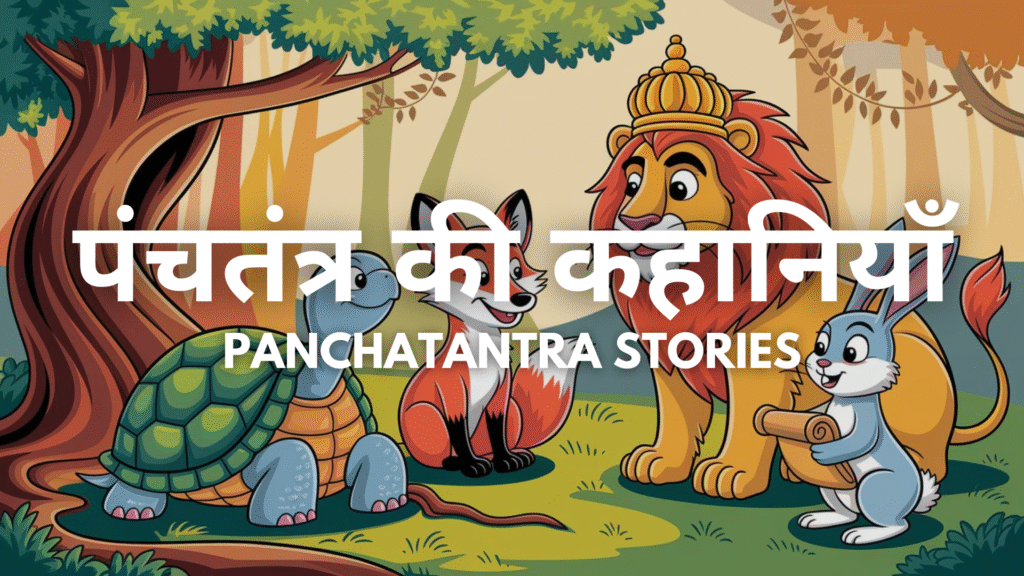
👉 Main characters: Lion, fox, turtle, monkey, dove, rabbit, etc.
👉 Style: Narrative within narrative (nested stories)
👉 Purpose: Entertaining moral education
🐿️ Explaining Human Behavior Through Animal Characters
1. The Fox’s Cleverness – A Lesson in Strategy and Caution
The fox is often portrayed in stories that involve trickery, politics, or survival. This character teaches us to question things and not trust blindly.
🔑 Lesson: Always think critically before you act.
2. The Turtle’s Slow Pace – Patience and Persistence
The turtle teaches us that even slow progress, when consistent, leads to success. It’s a classic “slow and steady wins the race” scenario.
🔑 Lesson: Move slowly if needed, but never stop.
3. The Lion’s Pride – The Downfall of Ego
The lion often plays the king but also displays arrogance, which leads to his defeat. These tales show that true leadership requires humility.
🔑 Lesson: Arrogance brings downfall.
4. The Rabbit’s Wisdom – Outwitting the Mighty
In one famous story, a tiny rabbit tricks a powerful lion using only his brain. It teaches kids (and adults) that intelligence can defeat brute strength.
🔑 Lesson: It’s not the size, but the smarts that matter.
👨👧👦 Why Panchatantra Stories Are Ideal for Children
- 🎯 Moral understanding: Knowing right from wrong
- 🧠 Critical thinking: How to analyze a situation
- 🗣️ Language growth: Improves vocabulary and storytelling skills
- 📖 Reading habit: Instills love for stories and books
🌍 Why These Stories Matter for Adults Too
- Helps understand human behavior in social or workplace situations
- Offers timeless values for real-life decision-making
- Brings nostalgia, comfort, and moral grounding
- Rekindles emotional connection with Indian wisdom
💡 Panchatantra in the Digital Age
Today, Panchatantra isn’t just in textbooks. It’s accessible through:
🎧 Audio stories,
📺 Animated videos,
🎙️ Podcasts,
📱 and Storytelling apps.
👉 That means age-old wisdom is now available in tech-savvy formats for both kids and grown-ups — old values in new voices.
🧾 Conclusion
Panchatantra is not just a storybook. It’s a manual for life, passed down through generations. You can read it again and again — and learn something new each time.
In today’s fast-paced world, where values are often lost in noise, Panchatantra reminds us of truth, patience, kindness, and cleverness — and why these virtues will never go out of style.