
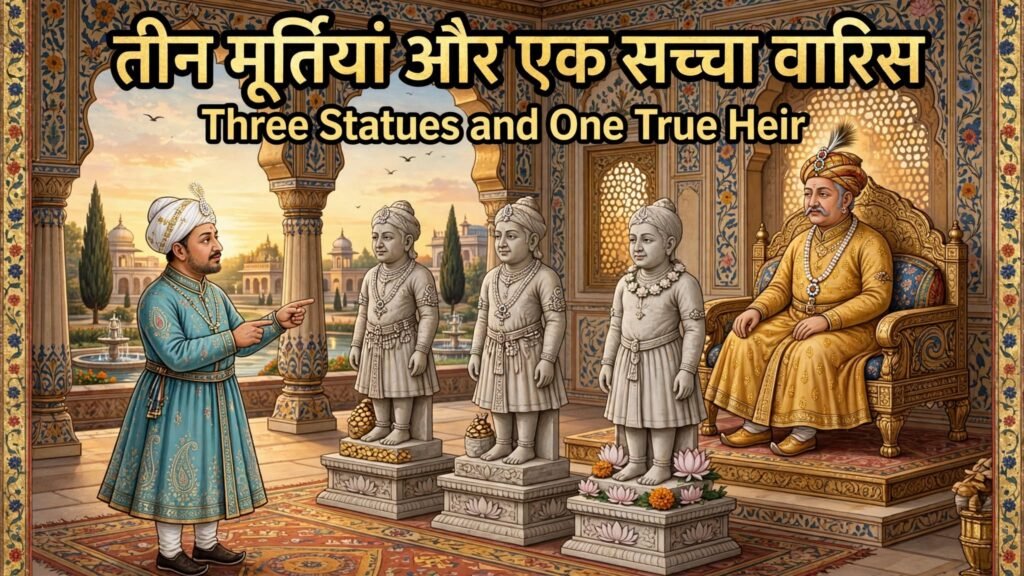
A rich merchant had grown very old. He had no son, but he had three nephews. Before dying, he got three beautiful statues made and wrote a will: “All my property will go to the one who understands the truth of these three statues. He will be my true heir.”
After the merchant’s death, the three nephews came to the court. Each one said, “I am the true heir!”
Akbar said to Birbal, “Birbal, you decide about these three statues and the true heir.”
Birbal carefully examined the three statues. All three looked exactly the same — same height, same colour, same smile. But Birbal’s sharp eyes noticed something deeper.
He said to the three nephews, “Each of you tell me one thing about these statues.”
The first nephew said, “They are made of gold, very valuable!”
The second said, “Their craftsmanship is excellent; the artist has done wonderful work!”
The third remained quiet for a moment. Then he said softly, “More important than the statues is that we remember uncle’s hard work and honesty. Property keeps coming and going.”
Birbal smiled. He looked at Akbar and said, “Your Majesty, the true heir is this third one. The first two were only looking at the price and beauty of the statues. The third spoke from the heart. True inheritance lies not in gold, but in good qualities.”
Akbar declared that the property would go to the third nephew. The other two were also given small shares, but the true heir was declared to be the third one.
The three statues were kept in the court so that everyone would remember that real wealth is good character.
Moral: True inheritance is not in wealth and riches, but in good values and honesty.